Tuesday, 31 January 2017

Research Findings: Strategies for Community Reintegration in Northeast Nigeria

Boko Haram (BH) members, abductees, and conscripts who have managed to escape or defect from the group are now attempting to reintegrate with their communities. However, such attempts have been met with resistance, as some communities perceive them to still be members of the group. In some cases, security agents, vigilantes, and community members have killed those attempting to return and reintegrate, leaving returnees/defectors even more traumatized. Furthermore, out of fear for the consequences when returning home, current BH members, abductees, and conscripts contemplating an escape or defection have fewer incentives to leave BH, which may be further empowering the group.

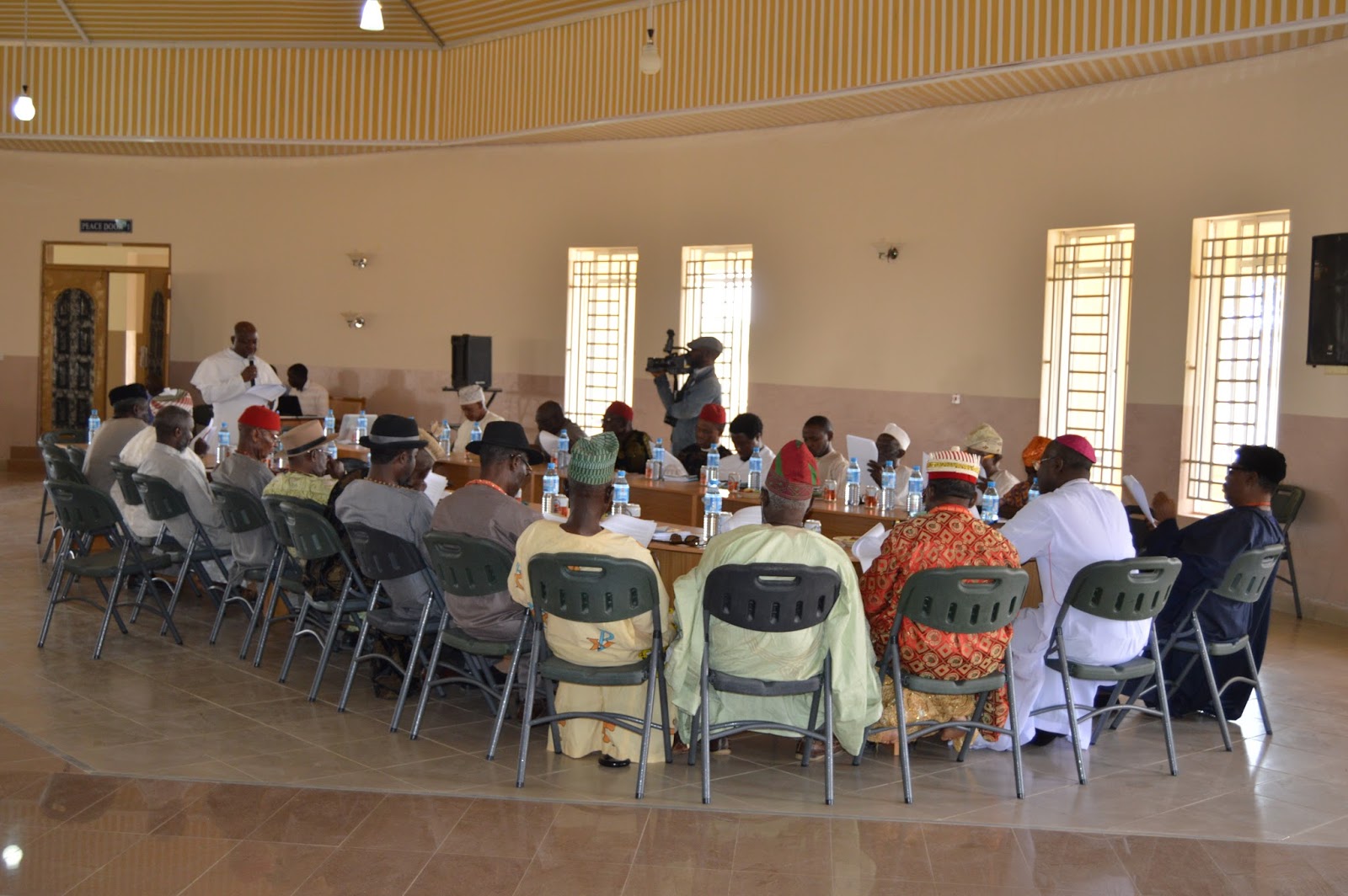
Dialogue, Reconciliation and Peace (DREP) Centre, with support from the Nigeria Regional Transition Initiative (NRTI) organized and facilitated 9 community-level meetings across 9 Local Government Areas (LGAs) in Adamawa, Borno, and Yobe States to generate community discussion about reintegration and the needs and expectations of different types of returnees. These two-day forums were held in three LGAs from each state and the tool/methodology used is appended.
The purpose is to understand community processes for reintegrating BH returnees and defectors to enable their safe return and to also enhance community trust and cohesion. This will in turn reduce the chances for unaccepted defectors/returnees joining or remaining members of BH.
It should be emphasized that the North-East is a large complex region impacted by the BH insurgency and this activity can only present a snapshot of the situation. Furthermore, accounts of the conflicts and responses gathered from communities are the subject of passionate emotions from both victims and perpetrators based on current state of mind and situations.


Below is an executive summary of findings. Full report will be available on request. 


EXECUTIVE SUMMARY
  • Boko Haram members, abductees and conscripts who have managed to escape/defect from the group are attempting to reintegrate with their communities. 
  • Such attempts have met stiff resistance, as they are perceived to still be members of the sect. 
  • In most cases, security agents, vigilantes and community members have killed those who attempted to return. 
  • The purpose of this project is to understand community processes for reintegrating Boko Haram returnees/defectors. 
  • This will enhance community trust and cohesion as well as reduce the chances for unaccepted returnees/defectors to join or remain members of insurgent groups. 
  • DREP Centre organized Community dialogue on Reintegration of Boko Haram returnees/defectors in 9 LGAs across Adamawa, Borno and Yobe States. 
  • After the initial pilot dialogue in three (3) LGAs across Adamawa, Borno and Yobe States, a meeting was held to review the results and make recommendations for the next phase based on lessons learned. 
  • Findings from these community dialogues show the following: 
  1. Discussions around the Boko Haram Insurgency is very sensitive as it has heightened suspicion and mistrust among people.
  2. More persons, including women and girls, willfully joined the Boko Haram sect as against the number of persons that were forcefully conscripted.
  3. Most of these communities felt sad, betrayed and still live in fear at the realization that some of their community members joined the Boko Haram Sect.
  4. It is clear that defectors/returnees as well as those captured or forcefully conscripted, just like other victims of the insurgency across the Northeast, bear different degrees of trauma that need to be addressed.
  5. Communities are still skeptical of accepting these defectors/returnees who they consider to still be members of Boko Haram.
  6. Defectors and returnees are either killed by security agents, vigilantes and community members or are taken away to detention camps in Yola.
  7. Similar treatments are meted out on those that were abducted or forcefully conscripted by the Boko Haram Group as they are considered “contaminated”.
  8. There are communities where reintegration is considered impossible. This is understandable based on the present hurt and trauma experienced at individual and community level.
  9. However, where possible, conditions for reintegrating Boko Haram defectors or returnees include assurance of total rehabilitation of defectors, trust and confidence building, physical and psychological rebuilding of community structures, restoration of means of livelihood and temporal relocation of defectors or returnees. Some of these conditions are based on traditional or cultural practices.
  10. Also, there are existing structures, institutions and cultural activities/festivals that can be leveraged upon to promote reconciliation and reintegration. The challenge, however, is that the current situation is novel and the impact is huge.
  11. It is believed that Religious and Community Leaders can play a key role in the reintegration process due to their influence on the people. However, since they are frequent targets of attacks, their involvement in any reintegration process at the moment makes them suspected links or supporters of Boko Haram.
  12. There is need for creativity or innovation in adapting these practices or leveraging on existing structures.
In the light of these, the following proposals/recommendations are made for further action:
  • More community dialogue meetings on reintegration of Boko Haram defectors/returnees across the three States of Adamawa, Borno and Yobe States. Selected community members that participated in the community dialogue on reintegration of Boko Haram defectors/returnees should be brought together to harmonize responses and findings from the meetings conducted already.
  • State level conferences be held across the three States of Adamawa, Borno and Yobe to educate people on the importance of accepting repentant defectors and returnees, emphasizing that this will weaken the Boko Haram support base and reduce the likelihood of them joining insurgent groups.
  • Immediate peacebuilding activities in these communities to rebuild trust and promote reconciliation among groups. This will help address the challenge of security agents and community members killing defectors that return back to the communities, thereby weakening the strength of Boko Haram. Engaging community members in this process endorses a sense of self- healing and reconciliation, which will in turn, promote stability for these communities in the future.
  • For the women and girls who have been rescued, as well as insurgency defectors, there is need for trauma healing and psychosocial support. This will be mutually beneficial to both victims and defectors as well as contribute to the overall deradicalization process for both victims and perpetrators of the Boko Haram insurgency.
  • Support towards restoration of means of livelihood and return of normalcy to most communities. It is crucial for the stability of Nigeria and States affected by the insurgency that provision is made for aid and ongoing support for both victims and defected perpetrators of the Boko Haram insurgency.
  • Religious and community leaders need to be organized and coordinated to first accept the idea of reintegration before they can impress on their followers to do same. They need to undergo trauma healing and psychosocial support sessions, as well as have their capacity in mediation and other peacebuilding skills enhanced.
  • Advocacy for deliberate government policies that will address the root causes of insurgency and extreme behaviors among citizens.

    Ogbonna, Chris Anthony, 
    Director of Programs, DREP Centre, Jos,
    Plateau State-Nigeria. 

    drepcentrejos@yahoo.com 

    ...detail report is available on request.

Monday, 30 January 2017

Community Reconciliation and Dialogue for Reintegration in Madagali LGA, Adamawa State


Findings from community dialogue on “Strategies for Community Reintegration in North East Nigeria’ carried out in three Local Government Areas each from Adamawa, Borno and Yobe States by DREP Centre reveal that security agents, organized vigilante and community members leave little or no room for reconciliation and reintegration of returnees and defectors. These resistance are caused by pains, hurt, anger, disappointment, mistrust and trauma which have further resulted in a situation where these victims have become perpetrators of violence especially against Boko Haram returnees or defectors, whom they now perceive to be contaminated.
However, with recent successes recorded by the military against the insurgents which has resulted to significant territorial loss for Boko Haram, several men, women, girls and children that were either abducted or forcefully conscripted have been released or rescued. These people as well as IDPs returning home face not only destroyed properties and lost loved ones but also uncertainty in relationships with their neighbors. Also, Boko Haram members who have managed to escape or defect from the group are attempting to return and reintegrate back to their communities. However, community members still perceive them to be members of the Boko Haram sect and have violently resisted such attempts at reconciliation. Hence the need to organize Community Peace Dialogues for Reconciliation and Reintegration in these affected communities. 
Dialogue Reconciliation and Peace Center (DREP) have been preparing the ground for the communities to reconcile and accept the return of ex-insurgent members and guarantee them safety in Madagali LGA  of Adamawa State with the aim of addressing issues of mutual suspicion along religious lines as well as healing social injuries caused by the insurgency among Madagali people. This activity will support reintegration and defection as part of the Disarmament, De-radicalization and Reintegration (DDR) cluster objective of DREP


Thursday, 15 December 2016

Religious and Community Leaders in Jos Sue for caution and security consciousness during Christmas Celebration


Religious and Ethnic/Community Leaders Met in Jos on Thursday, 15th December 2016 at Dialogue, Reconciliation and Peace (DREP) Centre, Jos to review the security situation in the State as well as take proactive actions to ensure a violence free Christmas celebration in the State. High point of the meeting was the issuing of a communique which was signed by all present cutting across the different religious and ethnic groups in the State.

Details of the communique reads:

MEETING OF RELIGIOUS AND ETHNIC/COMMUNITY LEADERS HELD AT THE DIALOGUE, RECONCILIATION AND PEACE (DREP) CENTRE, JOS SOUTH ON THURSDAY 15TH DECEMBER, 2016
Arising from a dialogue and consultative meeting of religious and ethnic/community leaders held on Thursday 15th December 2016, religious and community leaders noted that since our last meeting on Thursday 6th October, 2016, the following observations were made:
1.     Religious and community leaders in Jos appreciate the opportunity provided to visit the Executive Governor of Plateau State, Rt. Hon. Barr. Simon Lalong to intimate him on the activities of the Centre. We feel the Government should live up to its promises made to these elders such as road construction, provision of power supply, the reconstruction of the Main Market, the Rukuba Road Satellite Market and the road linking it from Sabon Gari and Tudun Wada, as well as sending a representative from government to be part of DREP Centre’s meeting.
2.     The Miyetti Allah Cattle Breeders Association reiterated their commitment to conducting sensitization among their people in rural communities on the need to live peacefully with their neighbors. They urged all groups to refrain from making media propaganda and stereotype against any particular ethnic group which could incite violence among our people. There is also a need to collaborate with one another stamping out criminality in our communities as this cuts across different groups, ethnicity and religion. We also call on government and security agencies to be more vigilant and proactive.
3.     With ongoing security challenges across the State, we feel an urgent need to request the presence of security personnel from the police and STF in out meeting so as to shed light on security issues as well as take proactive decisions to forestall deterioration of security situation in our communities.
4.     The successful hosting of the trade fair in Jos for fourteen (14) uninterrupted days is a clear indication that peace has come to stay. That does not mean that there are no criminal activities in our communities, we therefore call on security agents to fish out criminal elements who threaten the peace in the State, especially with the increased cases of kidnapping, abductions and killings. There is need for a change of mindset to avoid stereotyping certain ethnic or religious groups. The perpetrators are simply criminals.
5.     There is also a need for citizens to distinguish between foreign machineries who invade our communities and the local Fulani who have been co-existing peacefully with their host communities, securities along our borders needs to be intensified as such foreign machineries fished out from our communities.
6.     We call on all citizens to be security conscious and get to know their neighbors and what they do for a living.
7.     We wish to remind our citizens of the present inflation and its biting effects on our people, we therefore call on citizens to share their goods with one another in charity.
8.     We caution farmers not to sell their farm produce for money and to be prudent in its use for their families and friends.
9.     Finally, as we approach the festive period, we caution our citizens to be security conscious and live peacefully with another and we wish all citizens merry Christmas and a happy New Year.
RELIGIOUS LEADERS                                                                                                 
CATHOLIC SECRETARIAT OF NIGERIA (ARCHBISHOP I. A. KAIGAMA)                  
CHRISTIAN ASSOCIATION OF NIGERIA (REV. ADEYENI PETER K.)            
JAMA’ATU NASIR ISLAM (ALH. YUSUF SARUMI)                                        
KANAM EMIRATE COUNCIL (IBRAHIM JOSEPH ADAMU)                           
TEKAN/ECWA HQS (THOMAS W. HILDI)                                         
BELWIDIC (ROBERT MARCUS)

COMMUNITY LEADERS                                                                                             
BEROM COMMUNITY (DA N. Y. DANG)                                                       
YORUBA COMMUNITY (OBA SOLOMON A. OLUGBONI)                            
SOUTH-SOUTH COMMUNITY (CHIEF EWAREWAH)                                               
MIYETTI ALLAH (MUHAMMED NURU)                                                        
IGBO COMMUNITY (PROF. J. E. C. OBILOM)                                                           
DREP BOARD (P. D. GUNAT)  


Friday, 13 May 2016

DREP TO SPONSOR A BILL AGAINST PRODUCTION, SALE AND CONSUMPTION OF ILLICIT DRINKS AND DRUGS

On Wednesday 11 May 2016, DREP Centre held a roundtable discussion with professional and key stakeholders on the impact of drug abuse on peace and security in Jos and environs. The roundtable was geared towards proposing a bill against the production, sale and consumption of illicit drugs and drinks in the Plateau House of Assembly.

This roundtable was necessitated by the concerns raised by religious and community leaders who meet quarterly at DREP Centre on the menace of illicit drinks and drugs on our youths and communities at large. This concern is borne out of the fact that most of those affected are our youths who should be the hope of the future of our great nation and also whose physical strength and energy, like fire, can be productive as well as destructive.
On the area of production of illicit drinks and drugs, the roundtable sought to identify producers of these illicit drinks and drugs, map out areas and locations of production, suggest means of controlling production and also find out profitable alternatives for producers and those engaged in the illicit trade.
looking at the sale of illicit drinks and drugs, discussants sought to identify supply chain, suggest a mechanism that will help identify retail outlets and also suggest penalties for sellers and distributors. As for the consumption of these drinks and drugs, the roundtable suggested mechanisms that can be developed to curb consumption, institutional frameworks to mitigate consumption, identify areas of collaboration between government/stakeholders in the rehabilitation of addicts as well as the reintegrations and reengagement of former addicts.


Outcome of the meeting is as follows:
Preamble:
Arising from a roundtable discussion with experts, from Health, academia, security and reformative operatives, community and youth leaders and other professional stakeholders, chaired by His Grace, Most Rev. Dr. Ignatius Ayau Kaigama the Catholic Archbishop of Jos, with the Theme: Impact of drug abuse and other related substances on peace and security in Plateau State”, the Discussants agreed that production, sales and consumption of drugs and other abusive substance by young and older citizens on the Plateau is largely responsible for the crimes, violence, conflict and other security challenges experienced in the State. Consequently it made the following resolutions and recommendations: That,
1.     Producers of drugs and other abusive substances should be empowered with alternative trade and skills;
2.     Emergency and urgent steps toward educating, enlightening and creating awareness on the dangers of drugs by families, communities, schools and the media be embarked on;
3.     Equipment be adequately provided without delay to regulatory agencies to address the cancerous effect of drug abuse on the Plateau; 
4.     Regulations and laws for control of production, sales and distribution of alcohol and other abusive substances be enacted;
5.     Rehabilitation toward behavioral and attitudinal change be promoted
6.     Vocational trainings, farming and other economic empowerment incentives are to be hence forth provided by communities and governments.
Recommendations: That 
1.     The “I don’t care and keeping silent attitude” by families and communities be replaced with disclosure; 
2.      Parents and Teachers at primary, secondary and tertiary levels should take their responsibilities more seriously by engaging and not allowing young people to idle;
3.     Movies and other entertainment industries should be sanctioned for promoting and glamourizing drugs;
4.     Government should support and enhance the capacity of existing rehabilitation centers (mostly owned by Faith Base and NGO groups); 
5.     Vocational trainings and skills be included in rehabilitation centres;
6.     Destruction of properties of sponsors of abusive drugs, confiscation, fine, and imprisonment be visited on the chain of perpetrators;
7.     Whistle blowing and hotline mechanism be established by communities and government
8.     Parents of under aged offenders are to be penalised.

Discussants at the round table agreed that sponsoring and establishing a law will drastically
reduce and address the monstrous and frightening problem abuse of drugs and other substances
pose to peace and security in Plateau State.

Excerpts


  1. AN ADDRESS BY MOST REV. IGNATIUS A. KAIGAMA, ARCHBISHOP OF JOS (CHAIRMAN), AT A ROUND TABLE DISCUSSION WITH PROFESSIONALS AND OTHER STAKEHOLDERS ON THE IMPACT OF DRUG ABUSE ON PEACE AND SECURITY, HELD AT THE DIALOGUE, RECONCILIATION AND PEACE (DREP) CENTRE LOCATED IN KWANG, GOLD & BASE, RAYFIELD, JOS SOUTH LGA, ON WEDNESDAY 11TH MAY 2016


Protocols!
 I am delighted to have you here today and to welcome you all to this round table discussion. I thank you for responding to this invitation as this is an indication of our collective desire to build a peaceful and healthy society by ridding our society of drugs and alcoholic abuse and also regain the dented image of our dear State and Jos city in particular. 
I believe it is within our might with the help of God to initiate this process which will lead and culminate in the proposal of a bill against the production, sale and consumption of illicit drugs and drinks in the Plateau State House of Assembly.
This round table discussion will revolve around these three thematic areas.
PRODUCTION OF ILLICIT DRINKS AND DRUGS
Here, our discussion will seek to
1.     Identify the producers of these illicit drinks and drugs.
2.     Map out the areas and locations of production.
3.     Suggest means by which production can be controlled.
4.     Find out profitable alternatives for producers and those who engage in that illicit trade.
SALE OF ILLICIT DRINKS AND DRUGS
The goal of discussants here is to
1.     Identify the supply chain.
2.     Suggest a mechanism that will help to identify retail outlets.
3.     Suggest what government should do to sellers and distributors (gang leaders)in the form of  Penalty).
CONSUMPTION
The goals we seek from discussion on this thematic area are
1.     Suggest a punitive mechanism that can be developed to stop consumption.
2.     Suggest an institutional framework to mitigate consumption.
3.     Identify areas of collaboration between government/stakeholders in the rehabilitation of addicts.
4.     Reintegration and reengagement of former addicts.

Looking at the menace of drug abuse and the negative consequences it has on our collective peace and security as well as the impact on the health of our teaming youths, this meeting and discussion today will afford us the opportunity to reflect on the vulnerability of our youth and their involvement in crises, especially when under the influence of drugs and other intoxicants. We have all come here with the desire and the determination of rebuilding our communities and State at large by tackling this social ill of drug abuse.
Permit me to inform you that we are not alone in this struggle. Key religious and community leaders have been meeting here in DREP to discuss emerging issues that threaten our collective peace and security, and work out ways of collectively addressing these issues. One of these issues is the rampant case of drug abuse among youths in different communities within and around Jos and how it has contributed in the escalation of violence in many communities. 
This therefore makes it incumbent on us  to work together in preventing the spread of this social ill among youths, cutting across religious and ethnic affiliations. It calls on us all to be interested in this problem regardless of where it is prevalent and reflect on how this scourge can be curbed. 
This State is full of opportunities and those of us who are leaders of thought  are duty-bound of making sure that our wealth, status, knowledge and influence are used to ensure that our youths become responsible and productive in their communities and also realize there full human potential.  In order to achieve this and do something wonderful for humanity, we need to create a safe and conducive environment for our youths devoid of drugs abuse.  
We hope that at the end of this meeting, we will be advocating for a  legal and institutional framework in the form of a bill that will address the production, sale and consumption of illicit drugs, which has contributed in worsening the security situation in our beloved Plateau State as well as posing health challenges to  our youths.
I pray that we will go from here feeling fulfilled and confident that our dear State will be free from the scourges of drug and alcoholic abuse, which has afflicted almost all communities.
I thank you again for your presence here and for your commitment to the cause of peace. God bless us all.

2. WELCOME ADDRESS BY THE DIRECTOR OF DREP CENTRE, REV. FR. BLAISE AGWOM, AT THE ROUND TABLE DISCUSSION ON THE PRODUCTION SALE AND CONSUMPTION OF ILLICIT DRINKS AND DRUGS AT DREP CENTRE 12th MAY! 2016.


Your Grace, the Catholic Archbishop of Jos and Chairman of this very important round table discussion, 
Our respected Community Leaders,
Distinguished discussants,
The media,
My brothers and sisters,

It is a great privilege for me to welcome you to the Dialogue, Reconciliation and Peace (DREP) Centre this morning for this round table discussion on the theme: “The production, sale and consumption of illicit drinks and drugs in Jos metropolis and its surroundings.

This round table discussion was necessitated by the concern expressed by our respected religious and community leaders who meet for dialogue sessions here quarterly on the menace of illicit drinks and drugs on our youths and communities. You can all notice the presence of some of these elders such as the Archbishop of Jos and some of our community leaders. This concern has always been expressed by our elders every single time they meet here for their meeting. This concern is borne out of the fact that most of those affected are our youths who should be the hope of the future of our great nation and also whose physical strength and energy, like fire, can both be at the same time productive and destructive. 

This round table therefore, represents our individual and collective effort at rescuing our youths from the menace of drug abuse, the consumption of illicit drinks and their concomitant effects such as violence, sickness, crime, cultism etc.This is the beginning of a journey that we are convinced will lead to, and culminate in the proposal of a bill to the Plateau State House of Assembly which will control the production, sale and consumption of illicit drinks and drugs in our communities. We strongly believe that with the careful selection of participants who are mostly experts, professionals and people who have rich and lengthy experience in drug related issues and victims, this  discussion will at the end of the day produce an excellent framework that will lead to the successful drafting of a the said bill.  

So on behalf of the advisory board, management and staff of DREP, I humbly welcome you all and wish you a fruitful and successful deliberation.
Thank you and may

God bless you all.